Capitoline Museums Itinerary: 2, 3, or 4 Hours
Choose a practical two-, three-, or four-hour Capitoline Museums route covering the essential bronzes, sculptures, paintings, and Forum view.
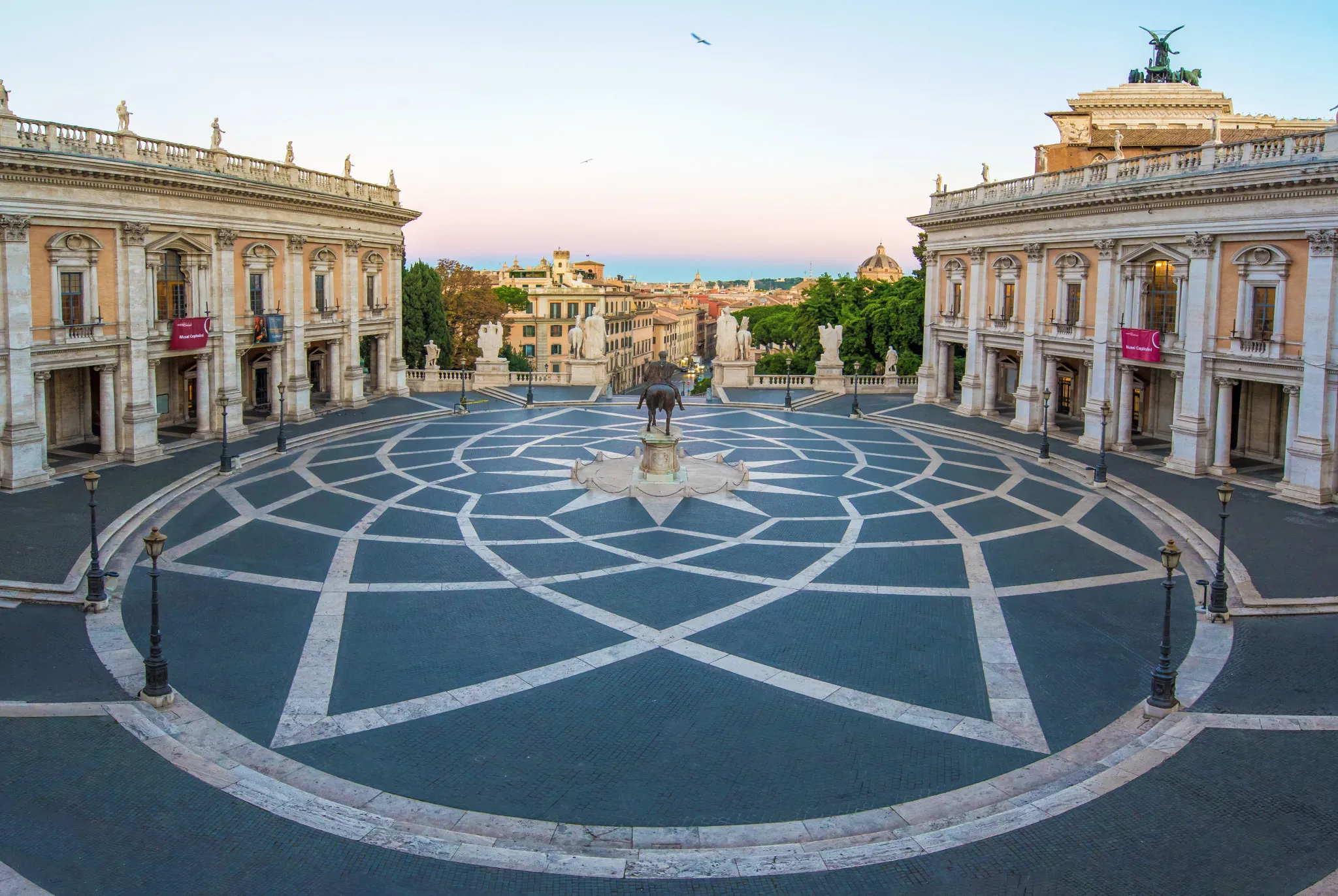
The Capitoline Museums become tiring when approached as a sequence of rooms to complete. A better plan assigns time by theme and accepts that a first visit cannot cover everything. These routes begin in Palazzo dei Conservatori, cross beneath the piazza and finish in Palazzo Nuovo.
Two-hour essential route
Use this plan only when your schedule is fixed.
First 45 minutes: civic rooms and bronzes
Move through the Conservators' Apartments to the Spinario, Capitoline Brutus, She-wolf and Bernini's Medusa. Read one or two labels closely rather than every panel.
Next 30 minutes: Marcus Aurelius and ancient Capitol
Enter the glass Exedra and walk around the original equestrian bronze. Study the Temple of Jupiter foundations nearby. These two works explain both imperial Rome and the physical history of the hill.
Next 20 minutes: choose painting or Horti
Select Caravaggio and Guercino in the Pinacoteca, or Commodus as Hercules and the Esquiline garden finds. Do not attempt both sections at speed.
Final 25 minutes: underground and one sculpture
Cross the Galleria Lapidaria, stop at the Forum viewpoint, then see either the Dying Gaul or Capitoline Venus in Palazzo Nuovo before leaving.
Three-hour balanced route
Add twenty minutes to the civic rooms and Exedra, forty minutes for the Pinacoteca, and forty-five minutes for Palazzo Nuovo. This permits both Dying Gaul and Venus, plus a useful comparison across the imperial portrait halls.
Pause for ten minutes around the underground crossing. The Forum view is most valuable when you orient the ruins rather than take a quick photograph.
Four-hour in-depth route
With four hours, include the Horti collections, longer inscription reading and a more complete Palazzo Nuovo circuit. Divide the visit into two blocks with a short seated or refreshment break. Confirm cafeteria access and current hours before relying on it.
A productive sequence is:
- Civic rooms and bronzes.
- Marcus Aurelius and Jupiter temple remains.
- Horti sculpture.
- Break.
- Pinacoteca.
- Galleria Lapidaria and Tabularium.
- Palazzo Nuovo.
Adapting for different interests
Art historians can reduce the Horti and give the Pinacoteca an hour. Archaeology enthusiasts should spend more time on Jupiter's podium, inscriptions and topography. Families benefit from alternating one famous object with a spatial change: bronze, courtyard, glass hall, underground passage, Forum view.
Visitors with reduced mobility should not assume that this exact sequence is available. Historic lifts and platforms shape the accessible route, and restoration has recently affected wheelchair access to Palazzo Nuovo. Ask staff for the current route on arrival.
What to combine after the museum
For a short extension, visit Santa Maria in Aracoeli or walk around Piazza Venezia. With more energy, descend toward the Theatre of Marcellus and Portico of Octavia. Avoid booking a rigid Colosseum or Forum time slot immediately after the museum.
The best itinerary is not the one with the most rooms. It is the one that preserves enough attention for the She-wolf, Marcus Aurelius, the inscriptions and the Dying Gaul to remain distinct after you leave.
Om forfatteren

Editorial Team
Denne uafhængige guide er redigeret ud fra officielle museumsoplysninger og autoritative kulturkilder; praktiske detaljer er gennemgået for klarhed, og tidsfølsomme oplysninger er markeret til kontrol.
Tags
Comments (0)
Loading comments...