How Rome Built the Capitoline Museums
A civic collection shaped by papal gifts, ancient sculpture, Michelangelo's architecture, excavations, and the city's changing idea of its own past.
Table of Contents
Before the Museum: The Ancient Capitol
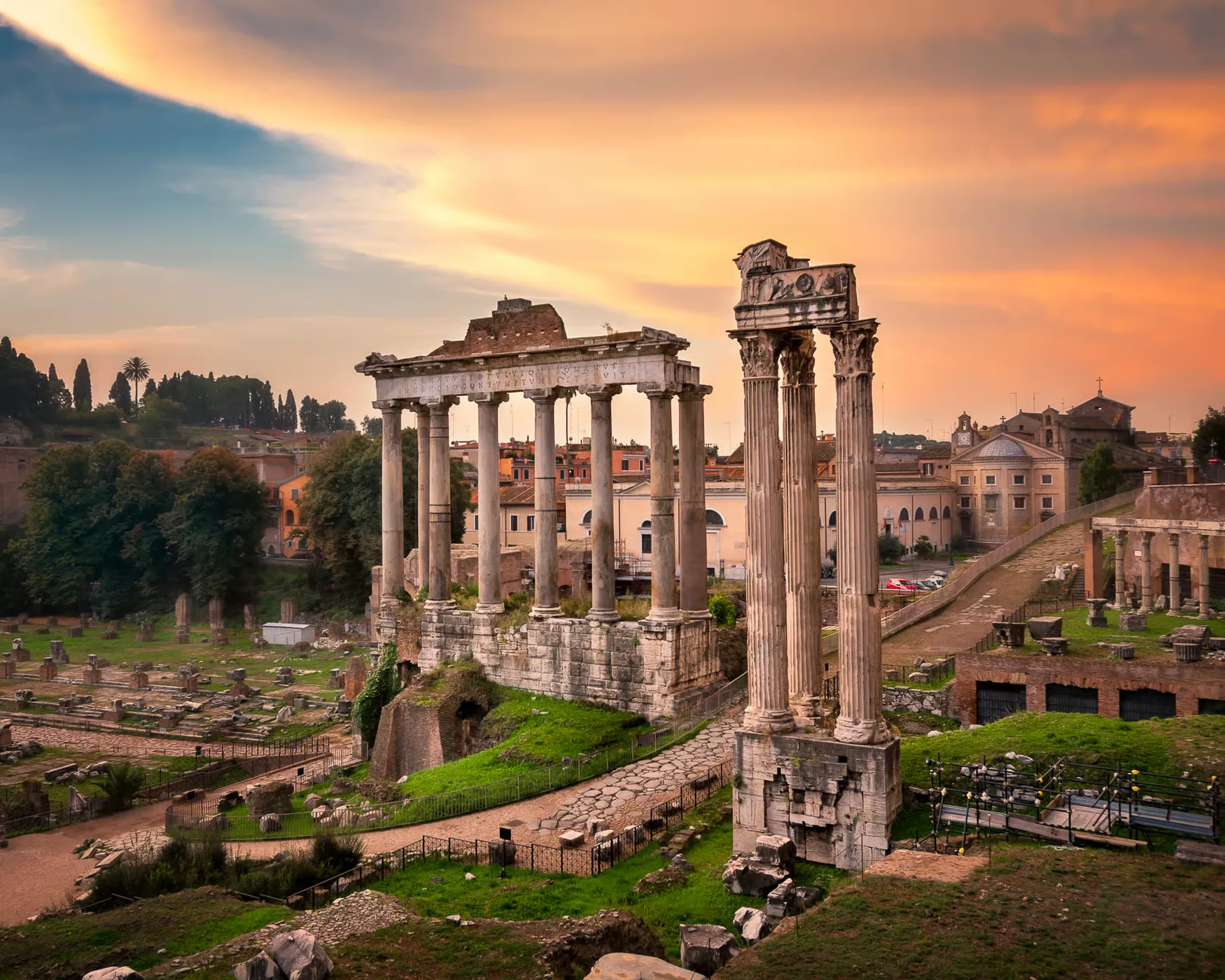
Long before the museum, the Capitoline Hill was one of ancient Rome's principal religious and political centers. The Temple of Jupiter Optimus Maximus dominated the southern summit, while the Tabularium, built in the first century BC, formed a monumental archive above the Roman Forum.
The modern museum route makes this ancient topography visible. Foundations of the Temple of Jupiter stand beside the Exedra of Marcus Aurelius, and the Tabularium's masonry and arcades survive within the passage between the two museum palaces.
Sixtus IV's Gift of 1471
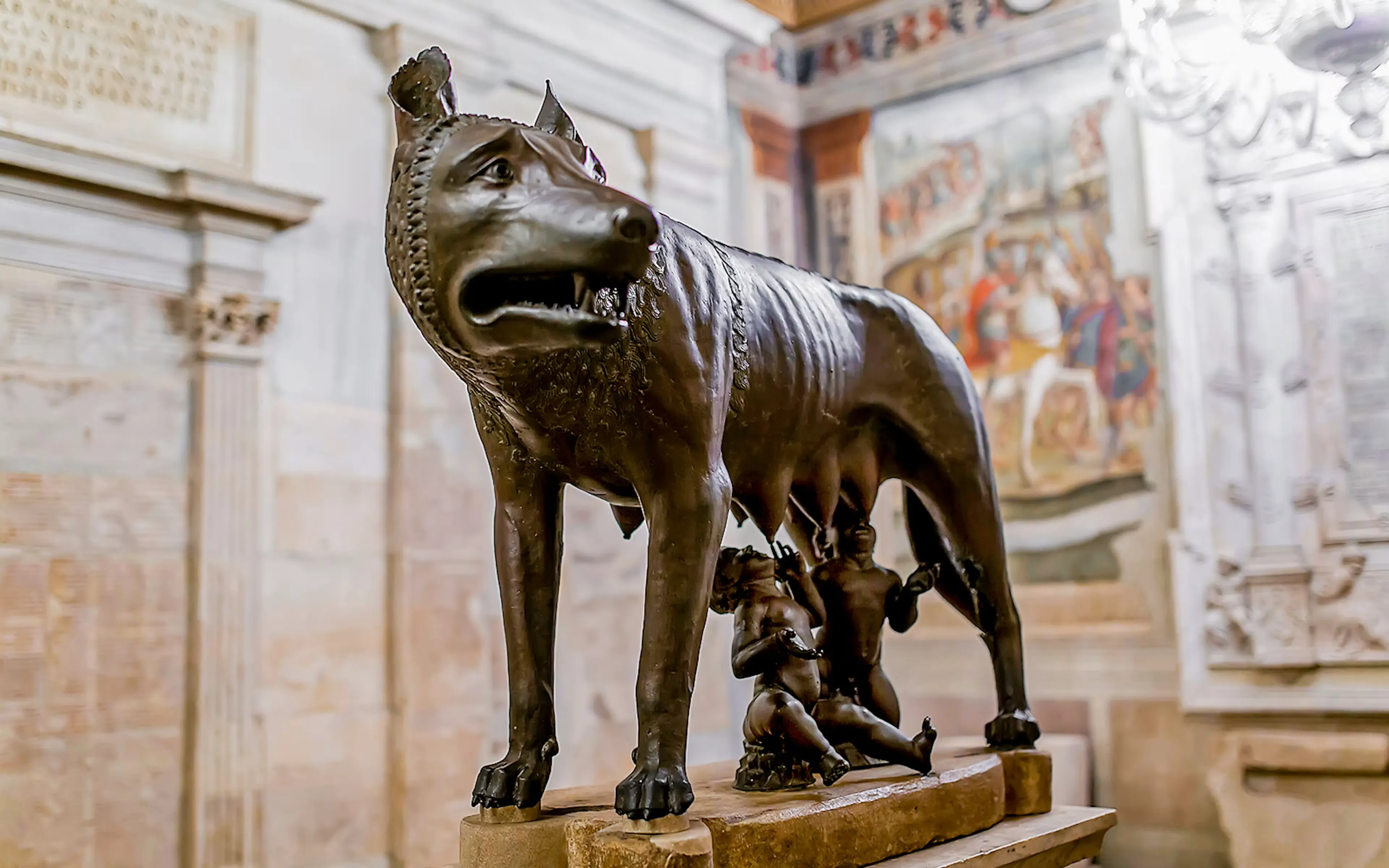
The museum's conventional foundation date is 1471. Pope Sixtus IV transferred a group of ancient bronzes from the Lateran to the civic authorities on the Capitoline Hill, presenting them as works restored to the Roman people rather than as a private princely collection.
The group included sculptures that became central to Rome's public image, among them the she-wolf, the Spinario, and the Camillus, together with colossal bronze fragments. Their placement at the seat of civic government joined antiquity to the identity of the living city.
Michelangelo Remakes the Campidoglio
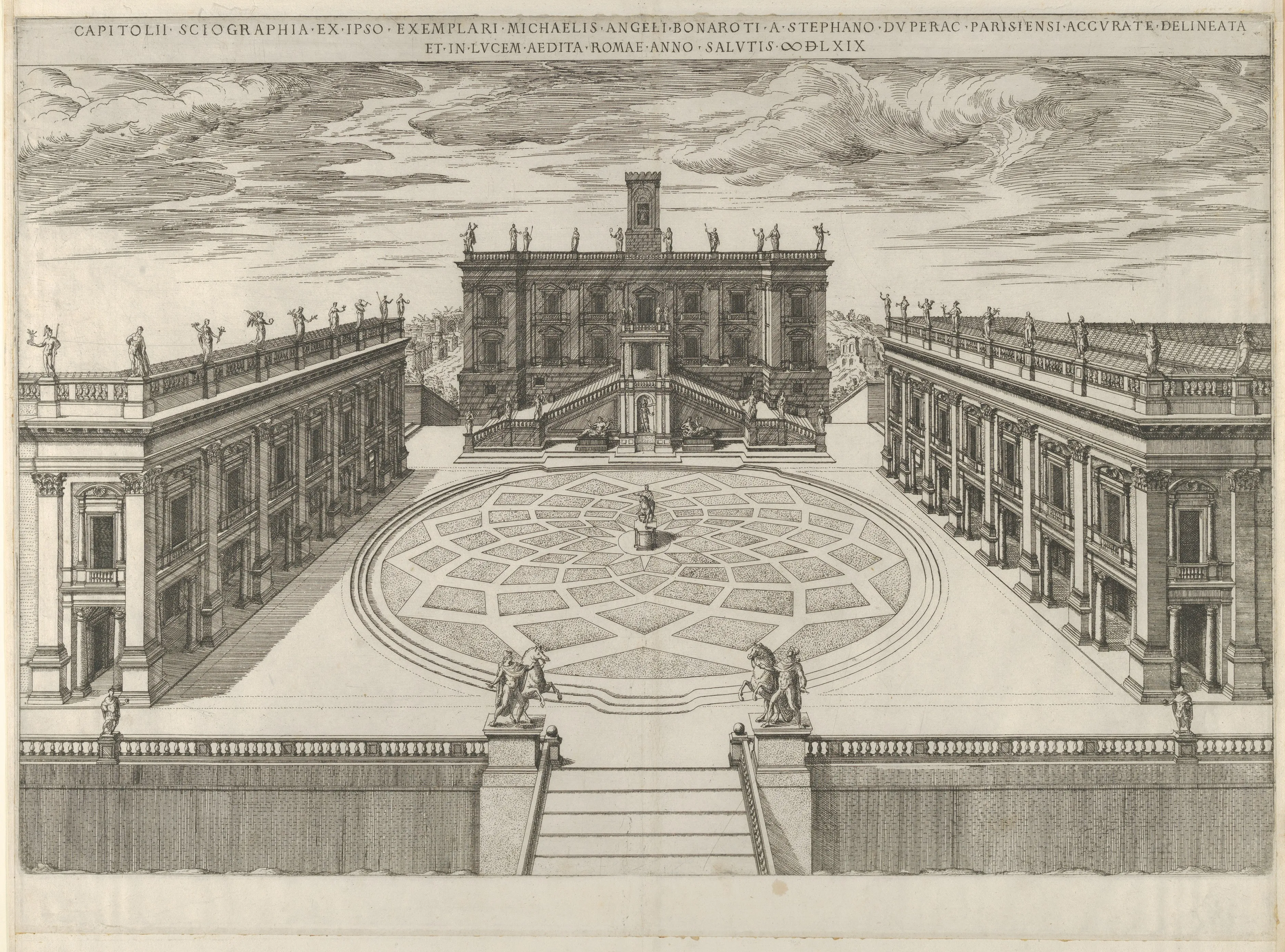
In 1536 Pope Paul III asked Michelangelo to redesign the Capitoline square. The architect turned the ensemble toward the modern city, conceived the trapezoidal piazza and monumental approach, and supplied a new facade scheme for Palazzo dei Conservatori.
Michelangelo did not live to see the entire project completed, but later architects followed and adapted his design. The result made the museum buildings part of a unified urban stage, with the equestrian Marcus Aurelius at its symbolic center.
Palazzo Nuovo and the Public Museum
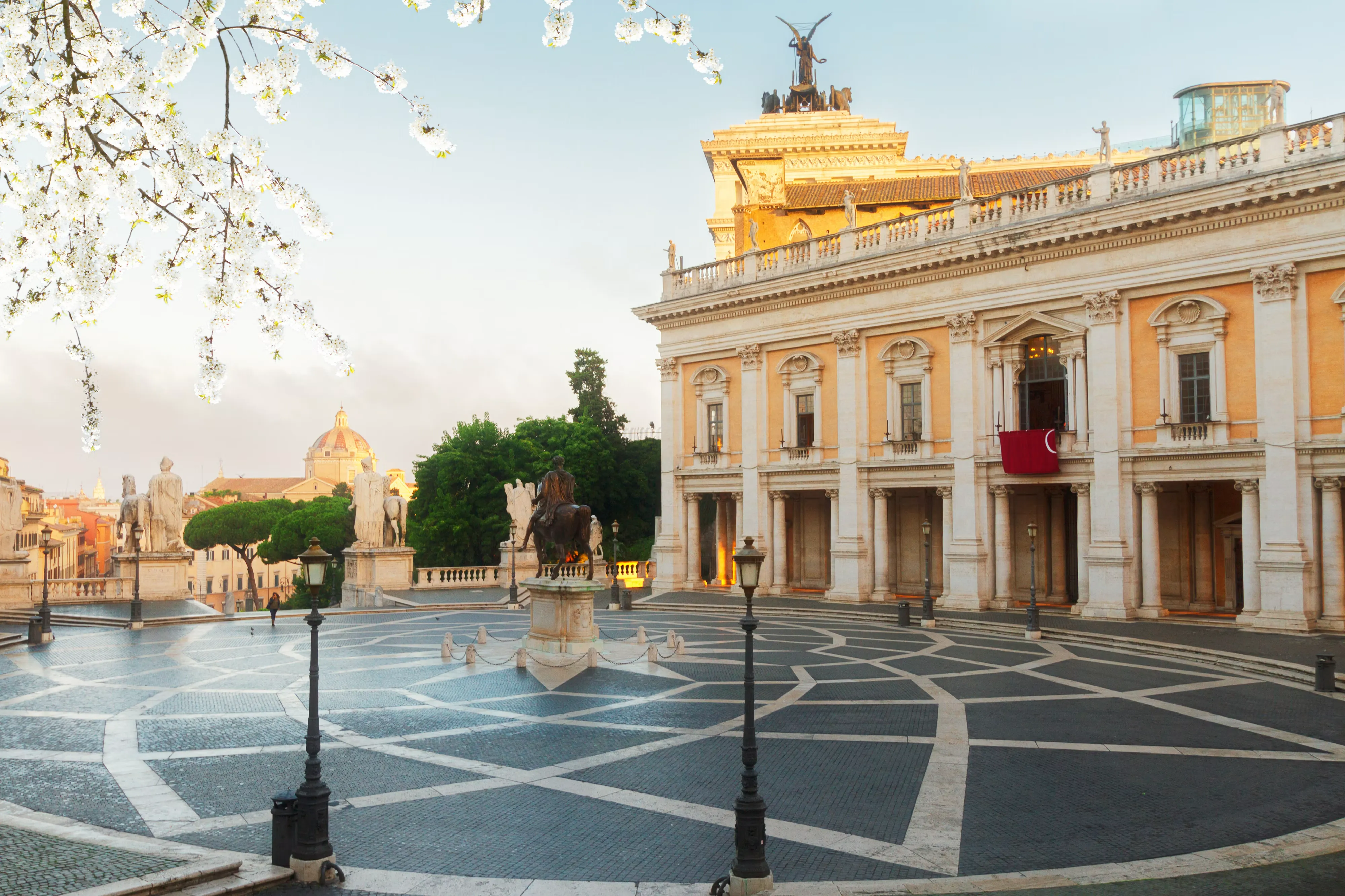
Palazzo Nuovo was built opposite Palazzo dei Conservatori to complete the balanced composition envisioned for the square. Its symmetrical interiors offered a purpose-built setting for the expanding collection of ancient sculpture.
Under Pope Clement XII, the museum opened to the public in 1734. That act gave the Capitoline collections a lasting place in museum history: antiquities associated with Rome's civic inheritance could now be studied in an institution intended for public access.
The Albani Collection
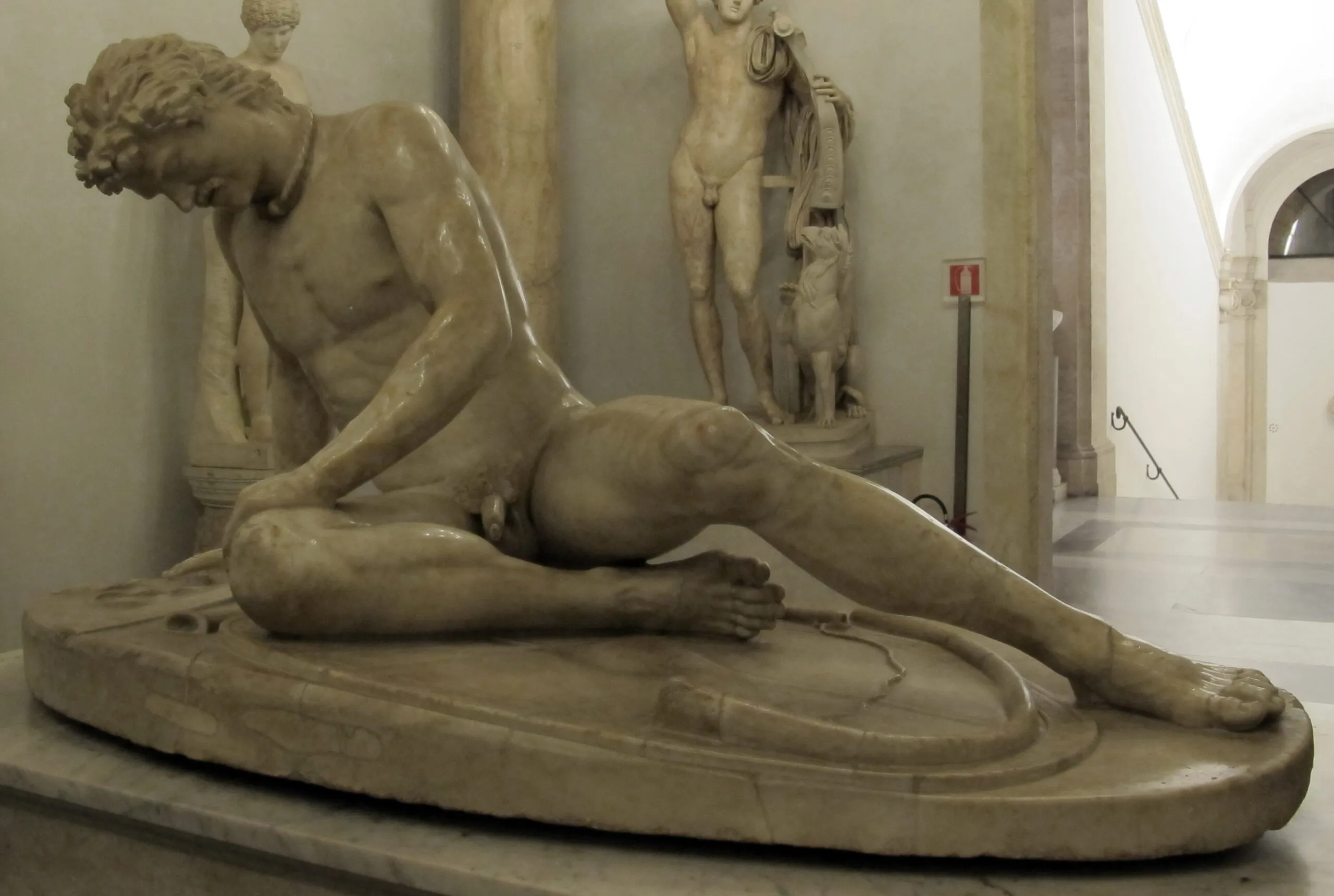
A decisive expansion came when Clement XII acquired Cardinal Alessandro Albani's collection of 418 sculptures in 1733. The purchase prevented the antiquities from leaving Rome and supplied Palazzo Nuovo with many of the works that still define its galleries.
The Dying Gaul, the Capitoline Venus, portraits of emperors and philosophers, and mythological sculpture are displayed in rooms that preserve much of the atmosphere of an eighteenth-century museum. Their arrangement is itself part of the history visitors come to see.
Birth of the Capitoline Picture Gallery
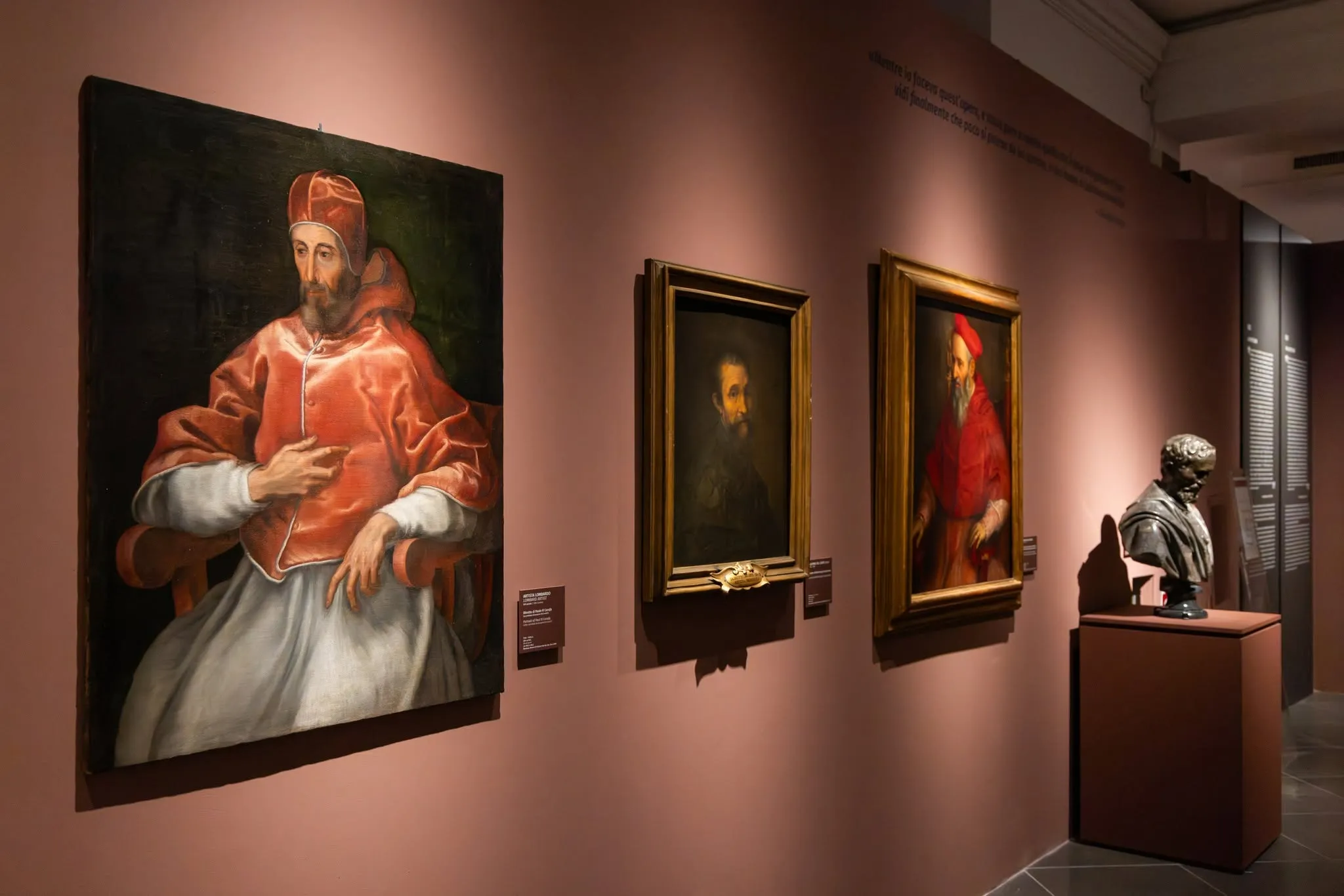
The Capitoline Pinacoteca was established in 1749 under Pope Benedict XIV. Important paintings entered through the acquisition of the Sacchetti and Pio collections, extending the museum beyond archaeology into the history of painting.
Its galleries now include Caravaggio's Fortune Teller and Saint John the Baptist, Guercino's Burial of Saint Petronilla, and works associated with Titian, Rubens, Guido Reni, and Pietro da Cortona. The collection rewards visitors who continue beyond the famous bronzes and marbles.
Rome's Excavations Transform the Collection
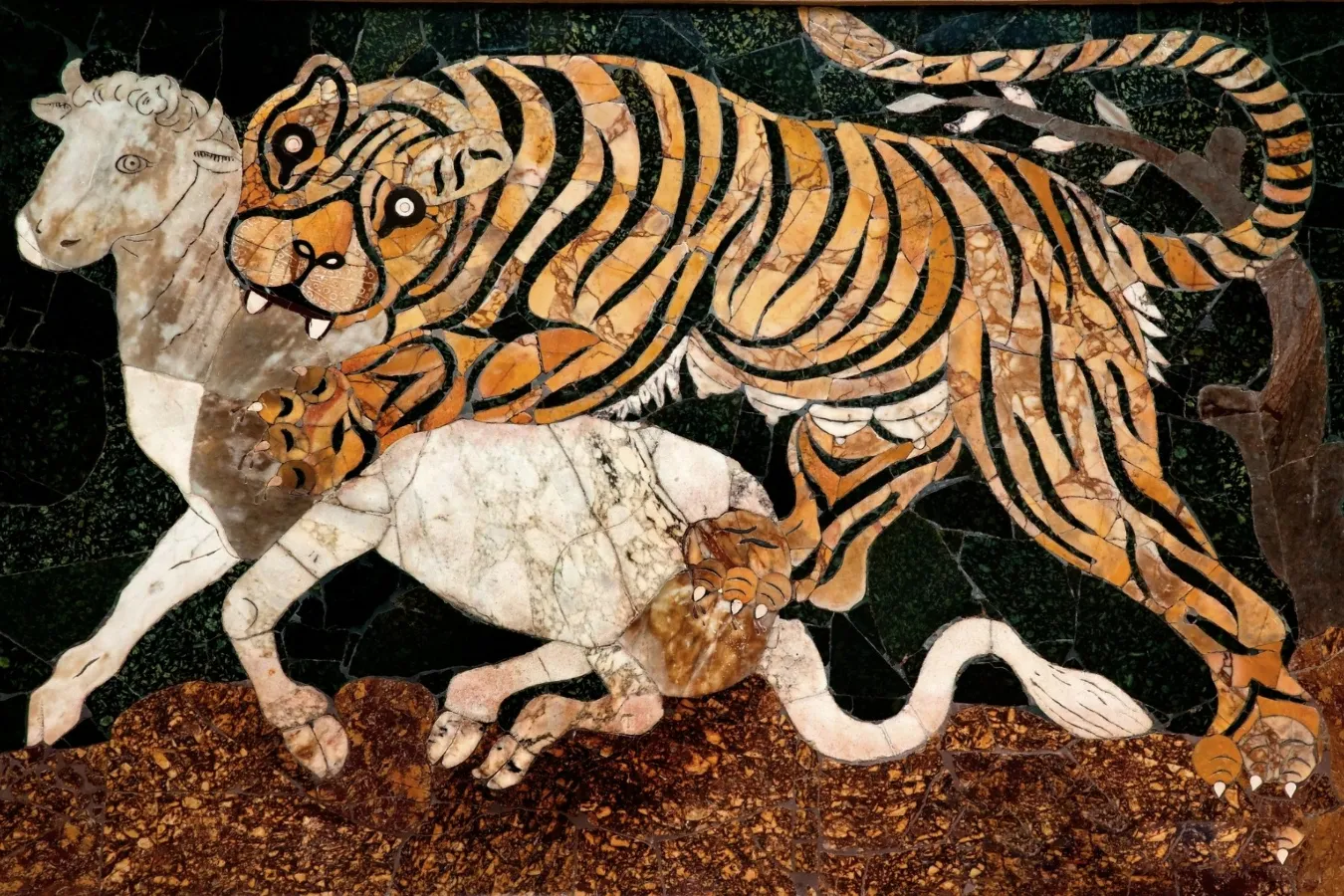
After Rome became capital of unified Italy in 1870, construction and urban expansion exposed large quantities of ancient material. Sculptures, inscriptions, architectural fragments, and objects from villas and gardens entered the municipal collections.
Finds from the Horti, the luxurious gardens of ancient Rome, added a new dimension to the museum. They document elite domestic landscapes on the Esquiline and elsewhere, linking celebrated artworks to the archaeological contexts from which they emerged.
Palazzo dei Conservatori
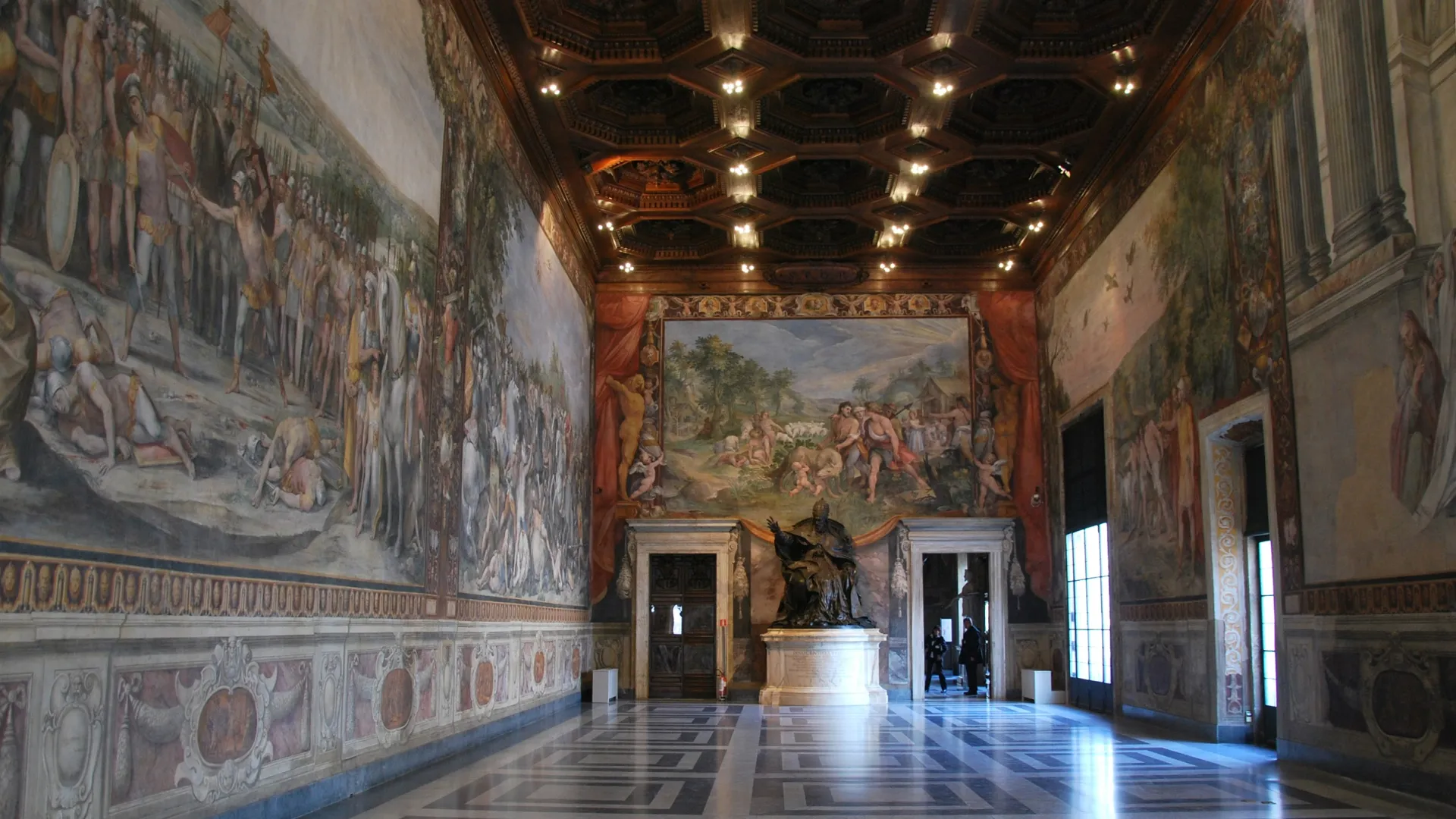
Palazzo dei Conservatori was both a government building and a setting for Rome's historical memory. Its ceremonial rooms are covered with frescoes of episodes from early Roman history, while ancient bronzes and later collections turn those political narratives into a material record.
The palace now brings together the Conservators' Apartment, the Capitoline Wolf, the Spinario, the Castellani collection, remains from the Temple of Jupiter, the Exedra of Marcus Aurelius, and the Pinacoteca. It is the most varied part of the complex.
Palazzo Nuovo's Sculpture Museum
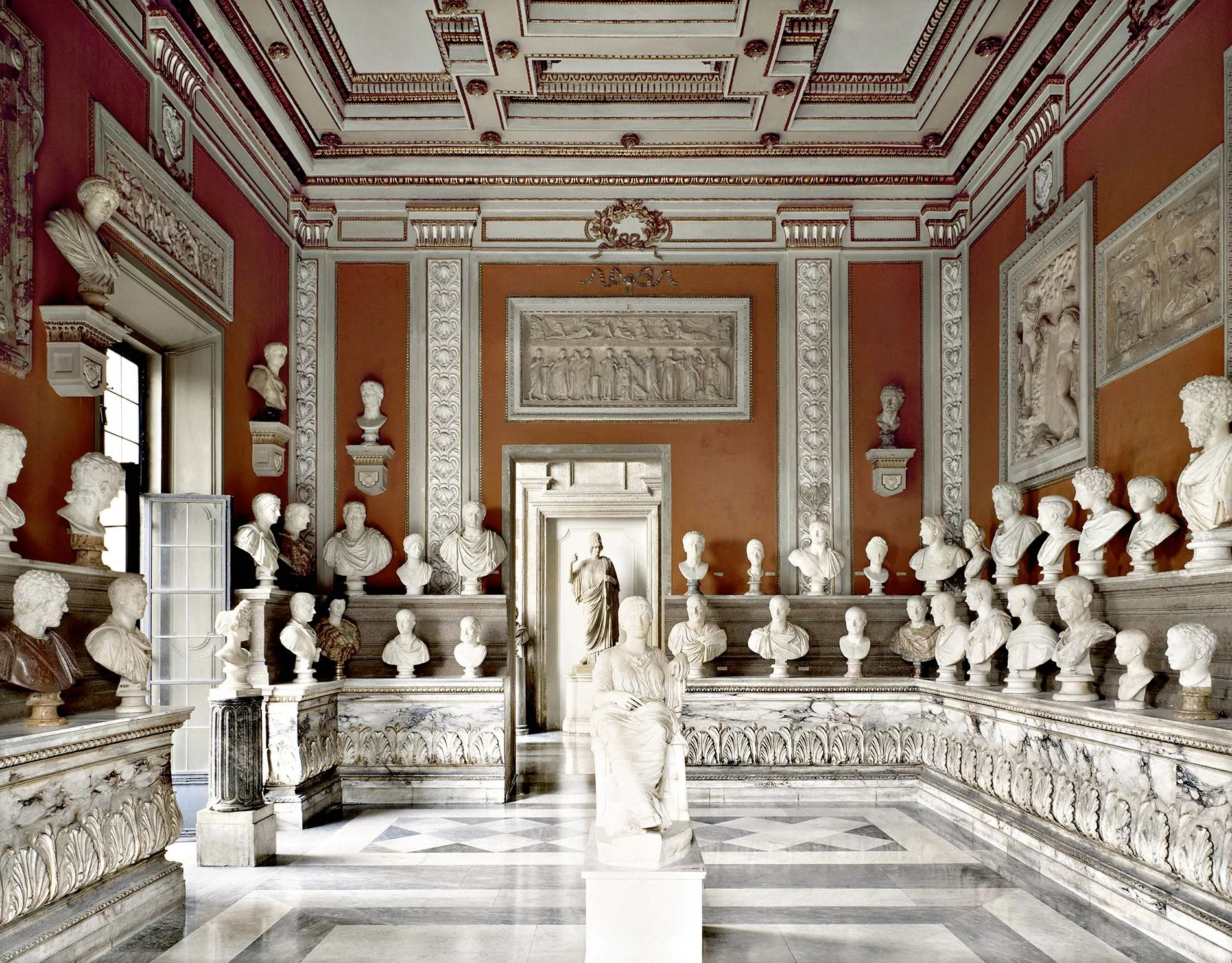
Palazzo Nuovo presents ancient sculpture in a setting whose decoration and display logic remain strongly rooted in the eighteenth century. Courtyards, cabinets, and grand halls create deliberate visual relationships among statues, inscriptions, and architectural fragments.
The Dying Gaul is compelling for its controlled pathos rather than as a simple image of defeat. Nearby, the Capitoline Venus, the Hall of the Philosophers, the Hall of the Emperors, and Marforio show how Roman collections organised beauty, identity, power, and learned memory.
The Tabularium and Underground Link
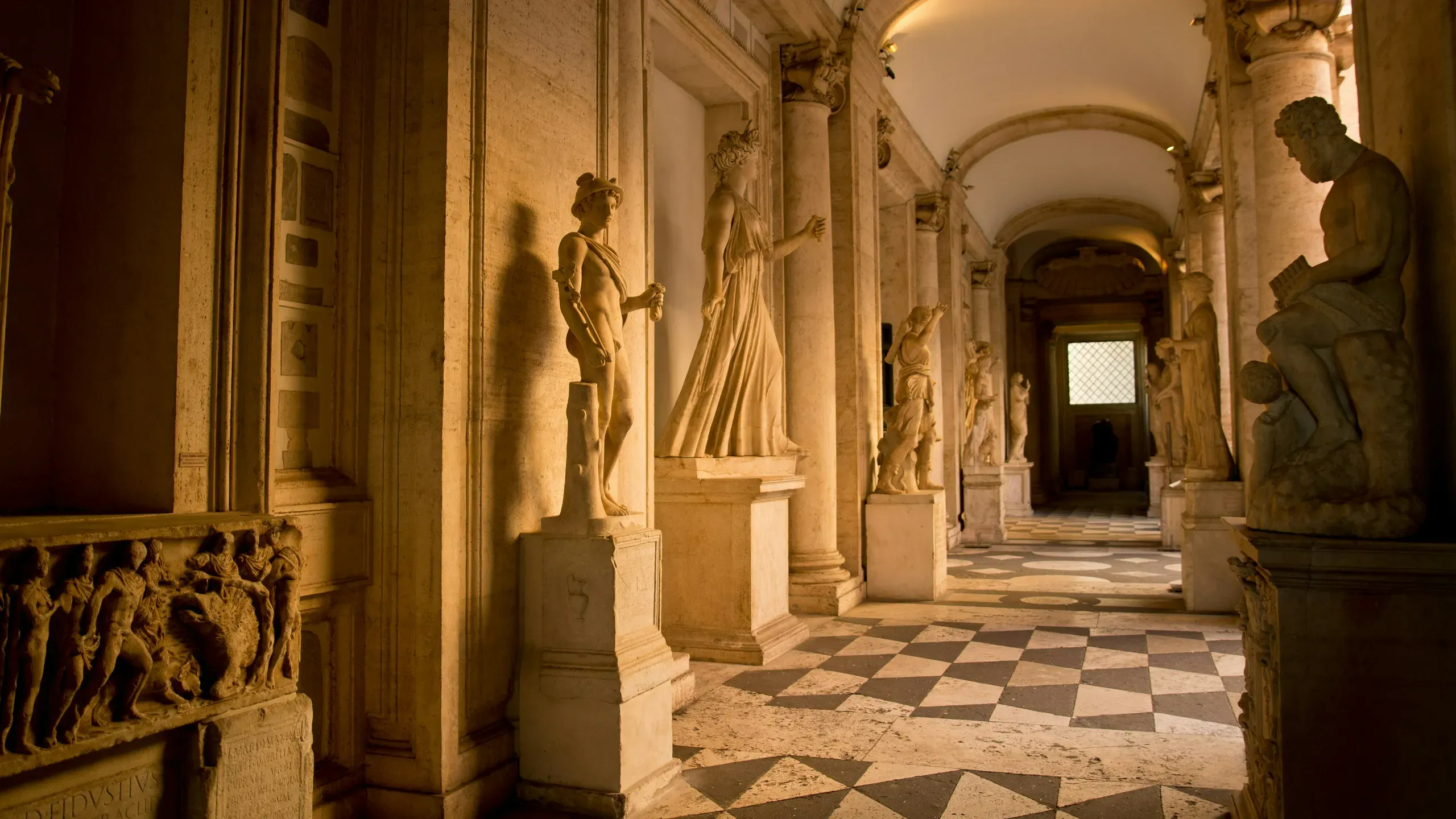
A twentieth-century underground gallery now connects the museum's principal palaces beneath Piazza del Campidoglio. The Galleria Lapidaria displays inscriptions that record names, offices, dedications, and funerary memory across Roman society.
The route enters the ancient Tabularium, traditionally identified with Rome's public record office. Its monumental arcade looks directly over the Forum, allowing visitors to connect objects in the galleries with the civic landscape where Roman institutions operated.
Symbols of Rome in Bronze
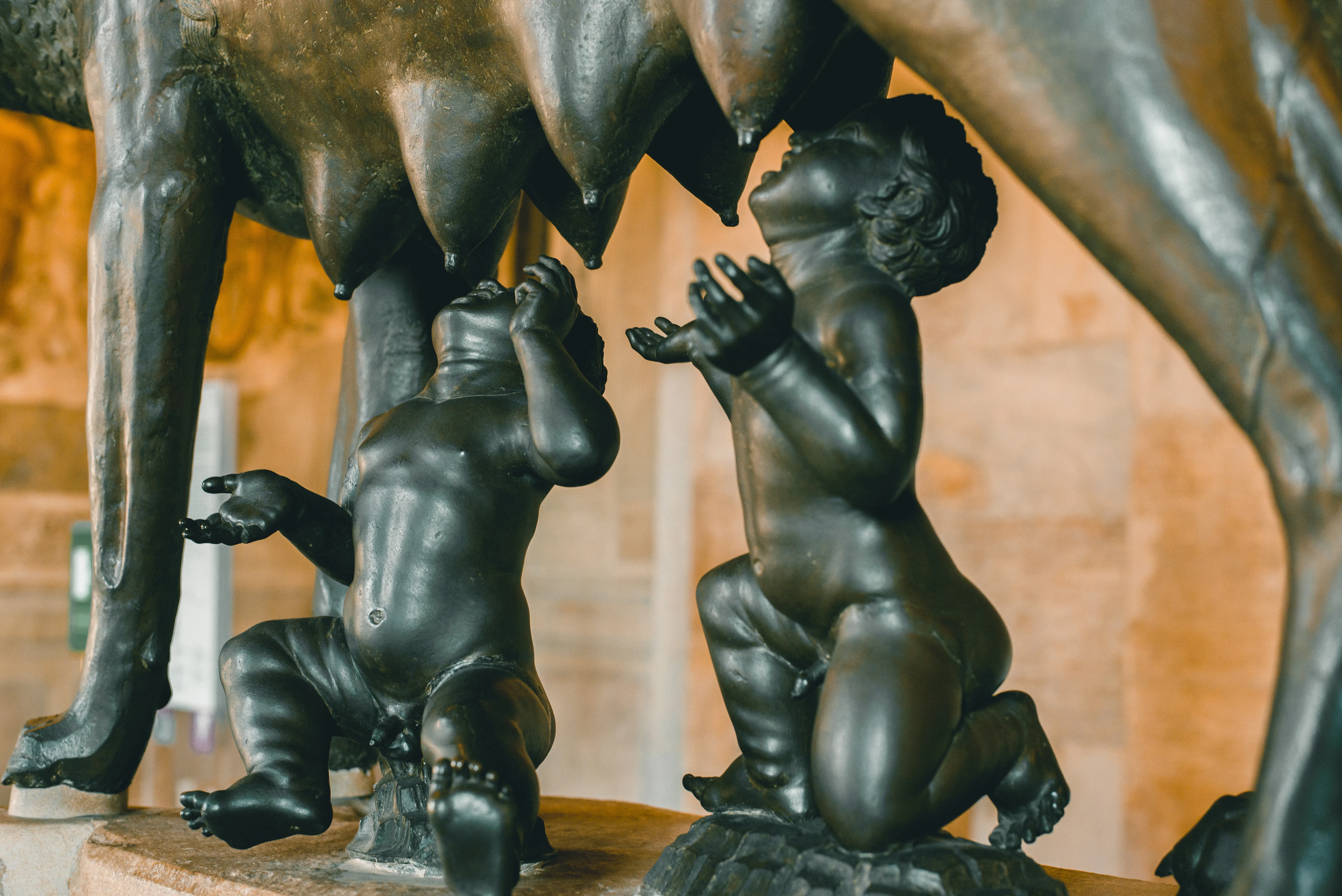
The Capitoline Wolf became one of Rome's most recognisable emblems, although scholarship has complicated its traditional ancient dating and the twins beneath it were added in the Renaissance. Its power lies partly in this layered afterlife: an object repeatedly reinterpreted to express the city's origins.
The Spinario likewise survived antiquity to become a model studied and copied by Renaissance artists. Together with the Camillus and colossal bronze fragments, it shows why the 1471 donation mattered: these works made ancient sculpture a visible component of civic culture.
Marcus Aurelius and Modern Conservation
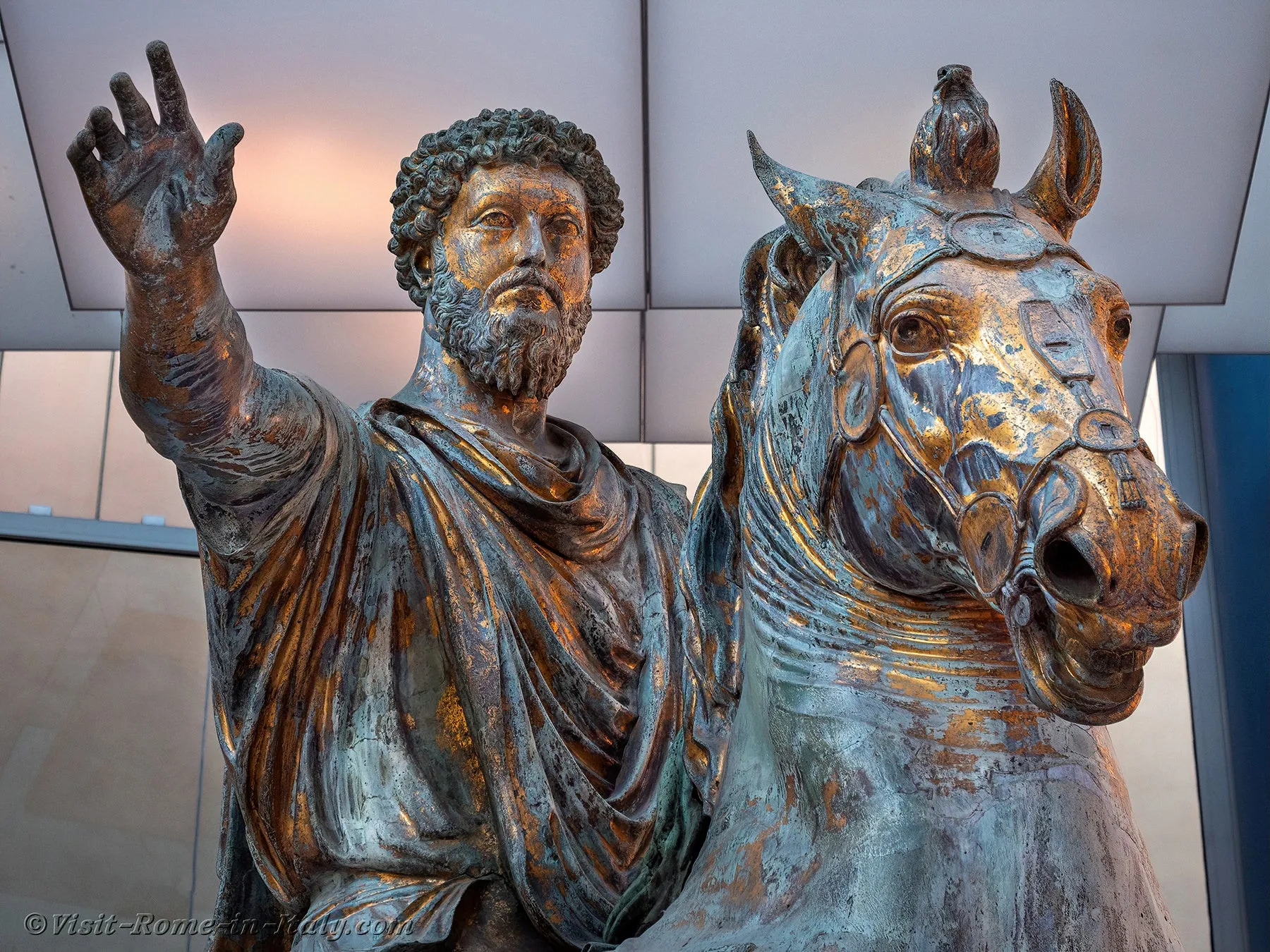
The equestrian statue of Marcus Aurelius survived from antiquity in exceptional completeness, helped by its long misidentification as the Christian emperor Constantine. For centuries it stood outdoors on the Capitoline, becoming the focus of Michelangelo's piazza.
Conservation needs eventually brought the original indoors. It now stands in a glass-roofed Exedra with other monumental remains, while a replica occupies the square. The move makes the difference between preserving an ancient bronze and maintaining its urban role unusually clear.
A Museum of the City
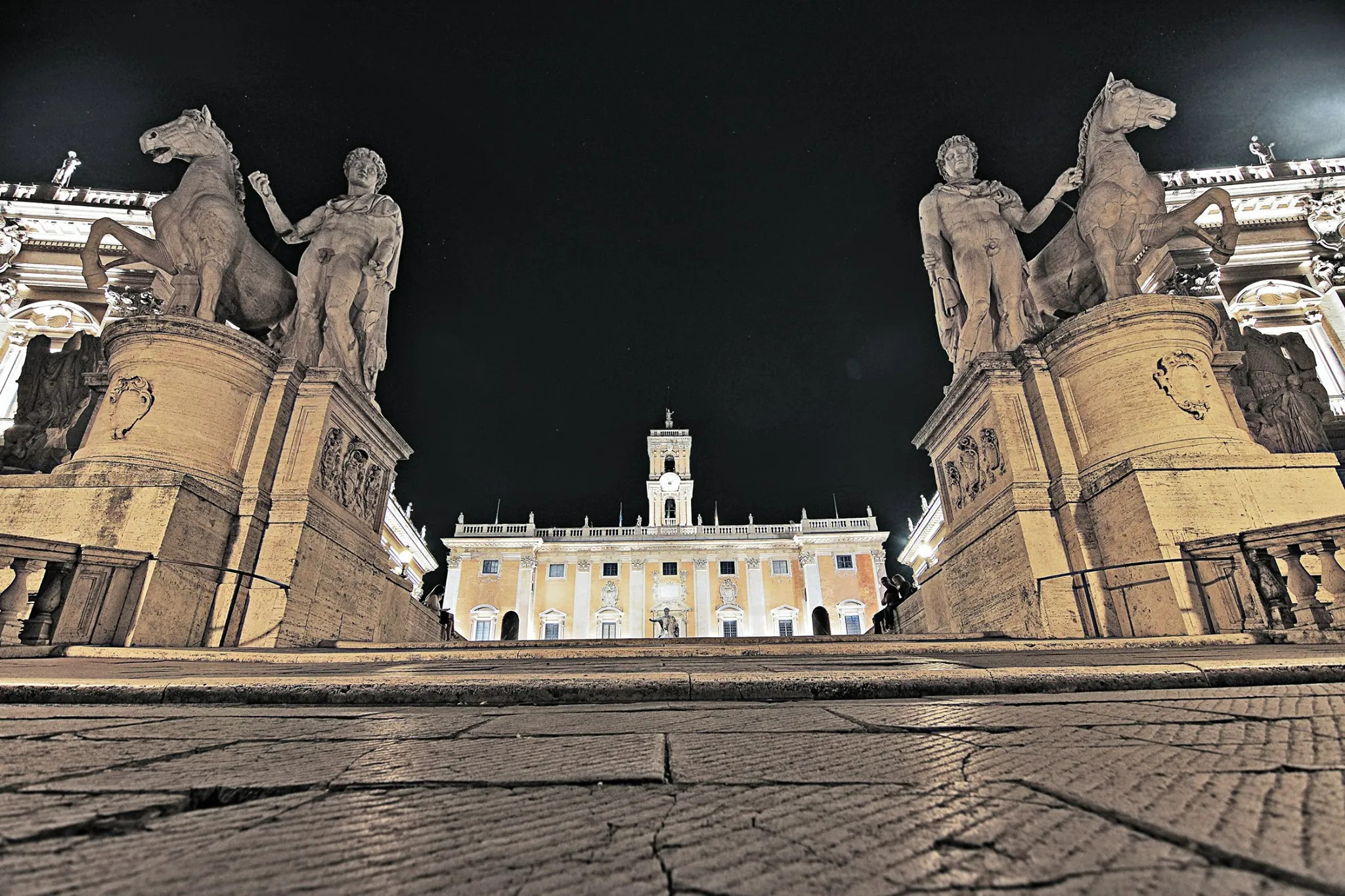
Unlike a collection assembled around one dynasty or excavation, the Capitoline Museums developed through repeated acts of civic definition: papal donations, municipal archaeology, purchases that kept works in Rome, and adaptations of historic government buildings.
That history explains the museum's range. Ancient temples, imperial portraits, Renaissance paintings, inscriptions, coins, ceremonial rooms, and views over the Forum are not separate attractions; together they show how Rome has preserved and argued with its past for more than five centuries.
Table of Contents
Before the Museum: The Ancient Capitol
Long before the museum, the Capitoline Hill was one of ancient Rome's principal religious and political centers. The Temple of Jupiter Optimus Maximus dominated the southern summit, while the Tabularium, built in the first century BC, formed a monumental archive above the Roman Forum.
The modern museum route makes this ancient topography visible. Foundations of the Temple of Jupiter stand beside the Exedra of Marcus Aurelius, and the Tabularium's masonry and arcades survive within the passage between the two museum palaces.
Sixtus IV's Gift of 1471
The museum's conventional foundation date is 1471. Pope Sixtus IV transferred a group of ancient bronzes from the Lateran to the civic authorities on the Capitoline Hill, presenting them as works restored to the Roman people rather than as a private princely collection.
The group included sculptures that became central to Rome's public image, among them the she-wolf, the Spinario, and the Camillus, together with colossal bronze fragments. Their placement at the seat of civic government joined antiquity to the identity of the living city.
Michelangelo Remakes the Campidoglio
In 1536 Pope Paul III asked Michelangelo to redesign the Capitoline square. The architect turned the ensemble toward the modern city, conceived the trapezoidal piazza and monumental approach, and supplied a new facade scheme for Palazzo dei Conservatori.
Michelangelo did not live to see the entire project completed, but later architects followed and adapted his design. The result made the museum buildings part of a unified urban stage, with the equestrian Marcus Aurelius at its symbolic center.
Palazzo Nuovo and the Public Museum
Palazzo Nuovo was built opposite Palazzo dei Conservatori to complete the balanced composition envisioned for the square. Its symmetrical interiors offered a purpose-built setting for the expanding collection of ancient sculpture.
Under Pope Clement XII, the museum opened to the public in 1734. That act gave the Capitoline collections a lasting place in museum history: antiquities associated with Rome's civic inheritance could now be studied in an institution intended for public access.
The Albani Collection
A decisive expansion came when Clement XII acquired Cardinal Alessandro Albani's collection of 418 sculptures in 1733. The purchase prevented the antiquities from leaving Rome and supplied Palazzo Nuovo with many of the works that still define its galleries.
The Dying Gaul, the Capitoline Venus, portraits of emperors and philosophers, and mythological sculpture are displayed in rooms that preserve much of the atmosphere of an eighteenth-century museum. Their arrangement is itself part of the history visitors come to see.
Birth of the Capitoline Picture Gallery
The Capitoline Pinacoteca was established in 1749 under Pope Benedict XIV. Important paintings entered through the acquisition of the Sacchetti and Pio collections, extending the museum beyond archaeology into the history of painting.
Its galleries now include Caravaggio's Fortune Teller and Saint John the Baptist, Guercino's Burial of Saint Petronilla, and works associated with Titian, Rubens, Guido Reni, and Pietro da Cortona. The collection rewards visitors who continue beyond the famous bronzes and marbles.
Rome's Excavations Transform the Collection
After Rome became capital of unified Italy in 1870, construction and urban expansion exposed large quantities of ancient material. Sculptures, inscriptions, architectural fragments, and objects from villas and gardens entered the municipal collections.
Finds from the Horti, the luxurious gardens of ancient Rome, added a new dimension to the museum. They document elite domestic landscapes on the Esquiline and elsewhere, linking celebrated artworks to the archaeological contexts from which they emerged.
Palazzo dei Conservatori
Palazzo dei Conservatori was both a government building and a setting for Rome's historical memory. Its ceremonial rooms are covered with frescoes of episodes from early Roman history, while ancient bronzes and later collections turn those political narratives into a material record.
The palace now brings together the Conservators' Apartment, the Capitoline Wolf, the Spinario, the Castellani collection, remains from the Temple of Jupiter, the Exedra of Marcus Aurelius, and the Pinacoteca. It is the most varied part of the complex.
Palazzo Nuovo's Sculpture Museum
Palazzo Nuovo presents ancient sculpture in a setting whose decoration and display logic remain strongly rooted in the eighteenth century. Courtyards, cabinets, and grand halls create deliberate visual relationships among statues, inscriptions, and architectural fragments.
The Dying Gaul is compelling for its controlled pathos rather than as a simple image of defeat. Nearby, the Capitoline Venus, the Hall of the Philosophers, the Hall of the Emperors, and Marforio show how Roman collections organised beauty, identity, power, and learned memory.
The Tabularium and Underground Link
A twentieth-century underground gallery now connects the museum's principal palaces beneath Piazza del Campidoglio. The Galleria Lapidaria displays inscriptions that record names, offices, dedications, and funerary memory across Roman society.
The route enters the ancient Tabularium, traditionally identified with Rome's public record office. Its monumental arcade looks directly over the Forum, allowing visitors to connect objects in the galleries with the civic landscape where Roman institutions operated.
Symbols of Rome in Bronze
The Capitoline Wolf became one of Rome's most recognisable emblems, although scholarship has complicated its traditional ancient dating and the twins beneath it were added in the Renaissance. Its power lies partly in this layered afterlife: an object repeatedly reinterpreted to express the city's origins.
The Spinario likewise survived antiquity to become a model studied and copied by Renaissance artists. Together with the Camillus and colossal bronze fragments, it shows why the 1471 donation mattered: these works made ancient sculpture a visible component of civic culture.
Marcus Aurelius and Modern Conservation
The equestrian statue of Marcus Aurelius survived from antiquity in exceptional completeness, helped by its long misidentification as the Christian emperor Constantine. For centuries it stood outdoors on the Capitoline, becoming the focus of Michelangelo's piazza.
Conservation needs eventually brought the original indoors. It now stands in a glass-roofed Exedra with other monumental remains, while a replica occupies the square. The move makes the difference between preserving an ancient bronze and maintaining its urban role unusually clear.
A Museum of the City
Unlike a collection assembled around one dynasty or excavation, the Capitoline Museums developed through repeated acts of civic definition: papal donations, municipal archaeology, purchases that kept works in Rome, and adaptations of historic government buildings.
That history explains the museum's range. Ancient temples, imperial portraits, Renaissance paintings, inscriptions, coins, ceremonial rooms, and views over the Forum are not separate attractions; together they show how Rome has preserved and argued with its past for more than five centuries.