15 Capitoline Museums Highlights Not to Miss
Find the 15 essential Capitoline Museums highlights, with context for the She-wolf, Marcus Aurelius, Dying Gaul, Venus, and more.
The Capitoline Museums contain far more than a first visit can absorb. These fifteen highlights create a route through civic myth, imperial power, Greek-influenced sculpture, archaeology and painting without reducing the museum to a checklist.
1. Capitoline She-wolf
Rome's emblem is also an object of scholarly debate. The museum retains a traditional ancient attribution, while scientific evidence has supported medieval casting. The twins were added later.
2. Equestrian Marcus Aurelius
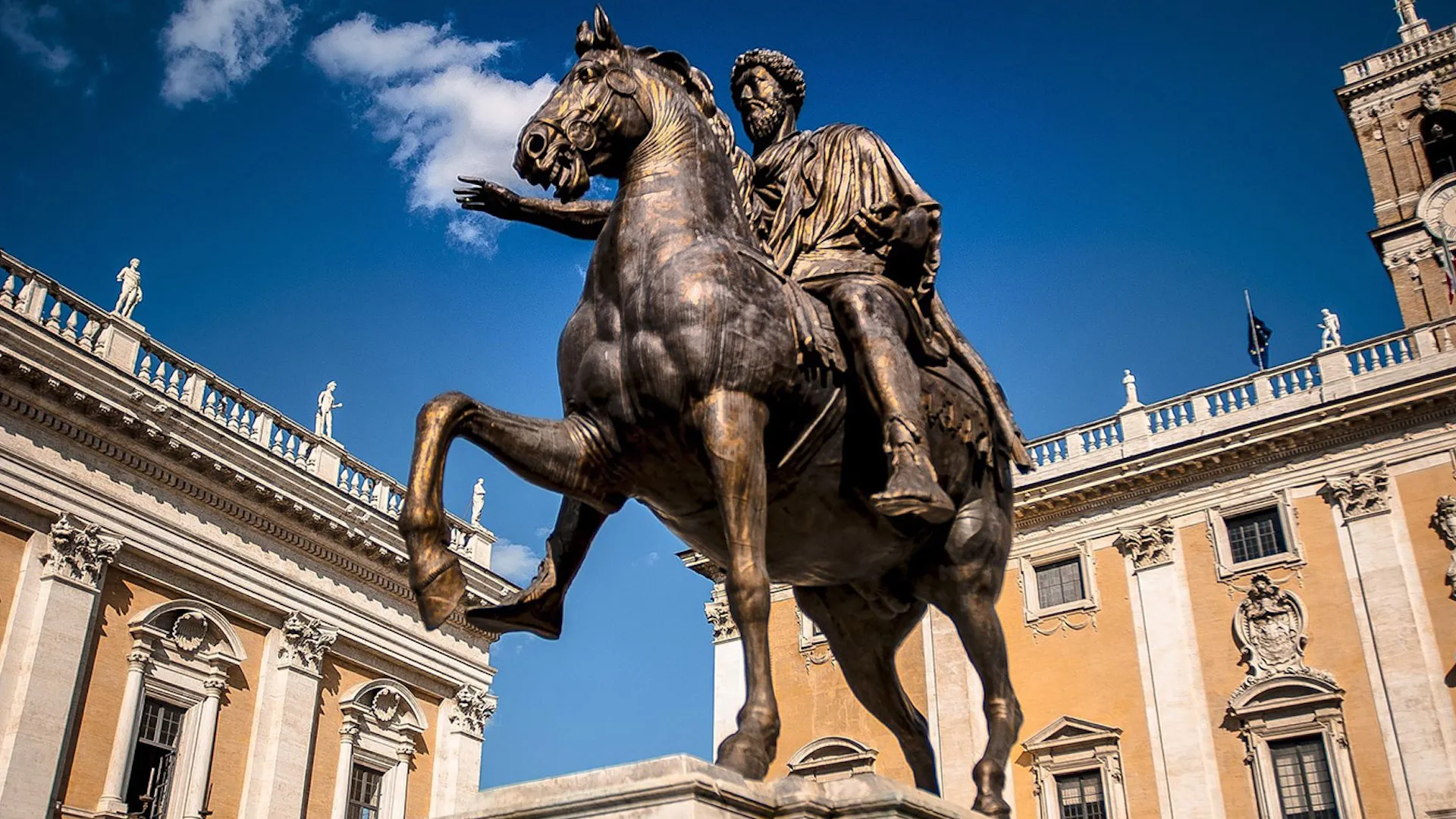
The original gilded bronze stands inside the glass Exedra. Its survival is exceptional: most monumental bronzes were melted down. The piazza holds a replica.
3. Temple of Jupiter foundations
Massive remains of the temple podium reveal the sacred scale of the ancient Capitol. Their presence turns the museum building into an archaeological site.
4. Spinario
This bronze boy removing a thorn from his foot entered the civic collection in 1471. Its composed, inward gesture inspired countless Renaissance copies.
5. Capitoline Brutus
The severe bronze portrait is traditionally identified with the founder of the Roman Republic, but that name is not securely established. Look at it as a powerful early Italian portrait rather than an illustrated biography.
6. Bernini's Medusa
Bernini shows Medusa at the instant of horrified self-recognition. The marble explores a paradox: the monster who petrifies others is herself transformed through stone.
7. Commodus as Hercules
The emperor wears the lion skin and carries Herculean attributes. Amazons, a globe and zodiacal imagery turn portraiture into a complex claim of divine rule.
8. Dying Gaul
This Roman marble derives from a Hellenistic victory monument. The defeated Galatian is marked as foreign but represented with dignity, pain and formidable physical presence.
9. Capitoline Venus
Displayed in an intimate octagonal cabinet, the nearly life-size marble changes as you move around it. The room is part of the encounter.
10. Marforio
The colossal reclining river or Oceanus figure fills Palazzo Nuovo's courtyard. It later became one of Rome's talking statues, associated with anonymous satire.
11. Hall of the Emperors
Rows of portraits show how Roman rulers used hair, beard, expression and costume to construct authority. Compare dynasties rather than studying each bust separately.
12. Caravaggio's Fortune Teller
The young client watches the fortune teller's face while she steals his ring. Hands, glances and social performance generate the narrative.
13. Guercino's Burial of Saint Petronilla
The monumental altarpiece connects an earthly burial with heavenly reception. Its scale and double structure are especially impressive in person.
14. Galleria Lapidaria
Roman inscriptions document soldiers, workers, families, laws and religious dedications. Read several translations to move beyond emperors and myths.
15. The Tabularium view
The vaulted gallery frames the Roman Forum from the hill that once dominated it. This is the museum's most revealing topographical moment.
Turning the list into a route
Begin with items 1–7 in Palazzo dei Conservatori, add the Pinacoteca paintings before crossing underground, pause in the Lapidary Gallery and at the Forum view, then finish with Palazzo Nuovo. This order follows the museum's circulation more effectively than chasing objects by fame.
If time is short, choose one work from each theme: She-wolf for civic identity, Marcus Aurelius for bronze and imperial power, Jupiter's foundations for the site, Fortune Teller for painting, an inscription for everyday history, and Dying Gaul for classical sculpture. Six attentive encounters are more memorable than fifteen rushed photographs.
Tentang penulis

Editorial Team
Panduan independen ini disunting dari informasi resmi museum dan sumber budaya tepercaya; detail praktis diperiksa untuk kejelasan dan informasi sensitif waktu ditandai untuk diperiksa ulang.
Tags
Comments (0)
Loading comments...